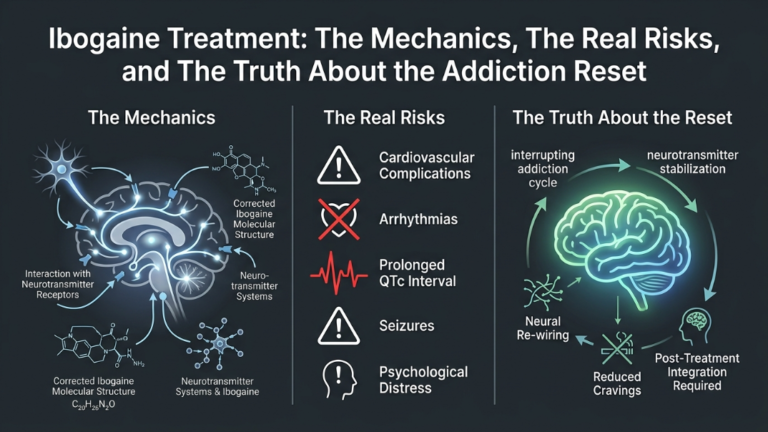
Ibogaine Treatment: The Mechanics, The Real Risks, and The Truth About the Addiction Reset
Traditional recovery programs often feel like a revolving door. You walk into a detox center,

Somebody usually finds ibogaine therapy for addiction the same way: they’ve tried rehab, maybe more than once. They’ve watched someone they love relapse after a clean stretch that felt like it might finally stick. And at some point, deep in a late-night search session, “ibogaine” comes up as the thing people whisper about in recovery forums — the treatment nobody’s doctor mentioned but everybody in certain circles seems to know about.
This guide is for that search. Not to sell you on ibogaine therapy for addiction, and not to scare you off it either. Just to lay out what it actually is, how it works in practice, what the research says, and what you need to understand before you take it seriously as an option for yourself or someone you love.
Ibogaine comes from the root bark of Tabernanthe iboga, a shrub native to Central West Africa. Communities in Gabon have used it for generations in the Bwiti spiritual tradition, mostly in ceremonial contexts that have nothing to do with drug treatment as we think of it in the West. The addiction application is a Western reinterpretation of a much older plant medicine tradition, and that history matters — it’s part of why ibogaine therapy for addiction sits in such a strange cultural and legal position today. It’s neither a purely traditional practice nor a conventional pharmaceutical.
The modern addiction-treatment angle traces back to Howard Lotsof, a heroin user in New York who tried ibogaine recreationally in 1962 and noticed something strange the next morning: no withdrawal, no craving, no urge to use. He spent the rest of his life trying to get that observation taken seriously by researchers and regulators, funding early studies and lobbying anyone who’d listen. Decades later, ibogaine therapy for addiction exists largely because of the underground network Lotsof helped build — people running informal treatment sessions long before any clinic did it above board.
What makes ibogaine unusual compared to methadone or buprenorphine is that it isn’t a maintenance drug. You don’t take it daily, and you don’t build a life around a dosing schedule. A course of ibogaine therapy for addiction is typically a single, supervised, high-dose session — sometimes two, spaced days apart — meant to interrupt physical dependence in one go rather than manage it indefinitely. That’s the pitch. Whether it delivers depends heavily on the substance someone’s addicted to, their health going in, and the quality of the program running the session.
The honest answer is: researchers don’t fully understand the mechanism, but they have solid theories, and the picture has gotten clearer over the past decade. Ibogaine interacts with several receptor systems in the brain at once — opioid receptors, NMDA receptors, and serotonin transporters among them. That’s unusual. Most addiction medications hit one target. Ibogaine hits several simultaneously, which may explain why it seems to blunt withdrawal symptoms that normally take days to taper off on their own.
People who’ve gone through ibogaine therapy for addiction often describe two distinct effects, and it’s worth separating them because they’re doing different work.
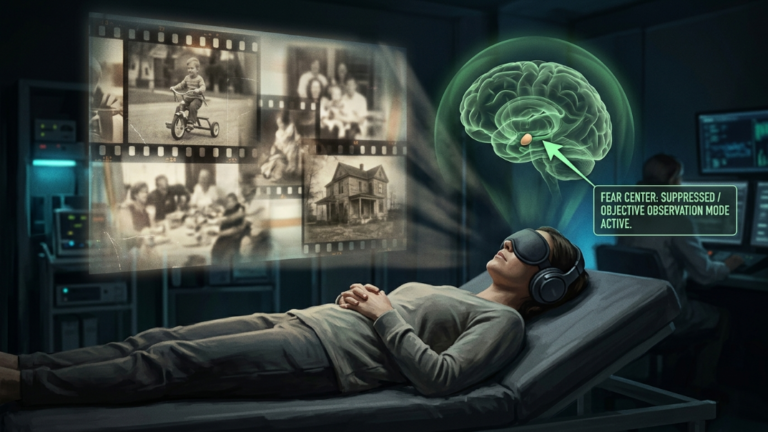
First, there’s a pharmacological effect: physical withdrawal symptoms drop off fast, sometimes within hours, which is not how opioid or alcohol withdrawal typically behaves. Second, there’s a psychological effect that’s harder to measure. Many describe an intense, dreamlike introspective state during the session, hours long, where memories and patterns tied to their addiction surface and get processed in a way that feels almost narrative — a life reviewed in real time. Some call it a spiritual experience. Others describe it in more clinical, neurological terms. Both camps are probably describing the same underlying event through different frameworks.
For a deeper breakdown of the mechanism — the receptor science, the psychological component, and what current studies say about how long the effect lasts — see our full piece on how ibogaine helps with addiction.
None of this makes ibogaine therapy for addiction a guaranteed fix, and any source that tells you otherwise should raise a flag. Studies remain small, mostly observational, and the plant alkaloid hasn’t gone through the kind of large randomized controlled trials that would settle the debate definitively. What exists is promising but incomplete — encouraging enough that serious researchers at institutions like Stanford and the MAPS-affiliated research community keep studying it, not solid enough to call it proven medicine.
A handful of published studies give the clearest picture available right now. Observational research out of Mexico and New Zealand — where ibogaine clinics operate legally — has tracked patients before and after treatment, and the pattern that emerges is fairly consistent: sharp reductions in withdrawal severity in the days immediately following treatment, along with meaningful drops in self-reported cravings.
What’s less clear is durability. Some follow-up studies show a meaningful percentage of patients still substance-free at six and twelve months. Others show relapse creeping back in, particularly for patients who didn’t pair the session with any structured aftercare. That pattern — strong short-term interruption, variable long-term outcome without follow-up support — comes up again and again in the ibogaine therapy for addiction literature, and it’s the single most important thing to understand before treatment: the session is an opening, not a finish line.
Opioids are where ibogaine therapy for addiction gets discussed most, and for good reason. Opioid withdrawal is brutal — the kind of physical suffering that sends people back to using just to make it stop, regardless of how badly they want to quit. That’s the core problem ibogaine claims to solve: interrupting the withdrawal cycle without weeks of gradual tapering.
We’ve covered this specific use case in detail in our companion piece on ibogaine for opioid addiction, including what the research says about relapse rates, how it compares to standard medication-assisted treatment like methadone and buprenorphine, and what a realistic recovery timeline looks like afterward. If opioids are your specific concern, that’s the better starting point — this page is the broad map, that one is the zoomed-in version.
Worth saying plainly here, even though we’re not going deep on it in this piece: ibogaine carries real cardiac risk, and reputable programs will not treat someone without medical screening first. That risk is elevated specifically for people with existing heart conditions or those using certain other substances or medications. More on evaluating programs below.
A real course of ibogaine treatment doesn’t look like popping a pill and walking it off the next day. It’s a structured, multi-day process, and the programs worth trusting treat it that way from intake to discharge.
Here’s roughly what ibogaine treatment looks like at a legitimate clinic:
That last point gets lost in a lot of the online conversation. People hear about ibogaine treatment and picture a one-and-done cure, something closer to surgery than to therapy. The clinics with real track records don’t sell it that way, and you should be skeptical of any program that does. They treat the session as an opening, not an ending, and they build a plan around what comes next.
We go much deeper into protocol specifics, dosing considerations, and how to evaluate a program’s medical standards in our dedicated guide to ibogaine treatment.
Here’s the short version, because this deserves — and gets — its own full breakdown elsewhere: ibogaine’s legal status in the US complicates access significantly, and most full clinical programs operate outside the country as a result. That’s not a small detail. It shapes almost everything about how ibogaine therapy for addiction actually gets delivered to American patients, from where treatment happens to how much it costs to get there.
If you’re specifically trying to figure out what’s legal, what’s available domestically, and what your realistic options are if you live in the US, we’ve written a dedicated guide covering ibogaine therapy USA and a separate one answering is ibogaine legal in the US directly. Read those before making any decisions — the legal and safety details matter too much to compress into a single paragraph here, and getting them wrong can carry real consequences.
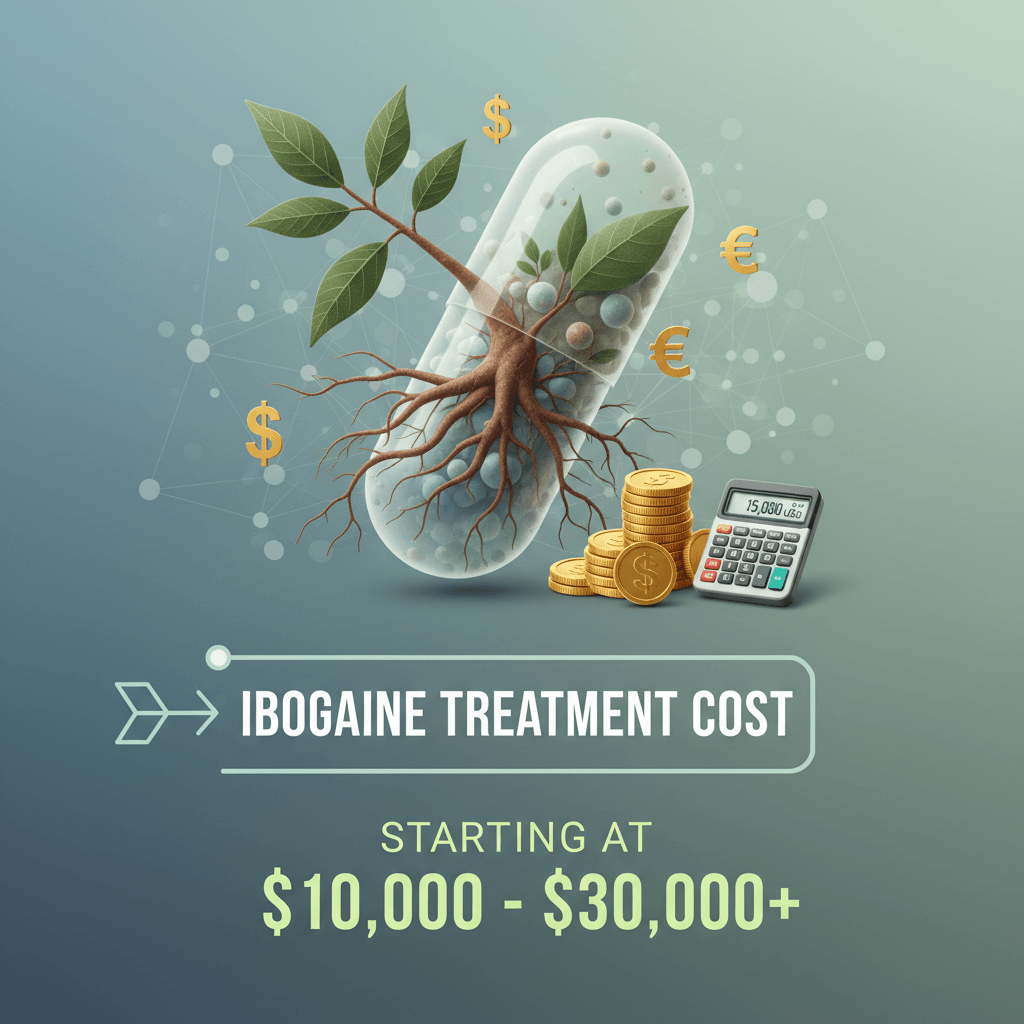
Image from The Iboga Institute
Nobody likes talking numbers first, but it’s a real barrier and it deserves a straight answer. Because most ibogaine therapy for addiction happens outside standard US healthcare and outside insurance coverage entirely, patients pay out of pocket, and prices vary widely by clinic, country, and length of stay. Programs can range from a few thousand dollars for a bare-bones session to well over ten thousand for a longer stay with more comprehensive medical support and aftercare planning. Cheaper isn’t automatically worse, and pricier isn’t automatically safer — but a price far below the market average from a provider that’s vague about its medical protocols is a real warning sign, not a bargain.
One of the main factors of price is location, we at Ibogara are based in Africa (the source of Iboga), and we give same quality for cheaper, because we are the source, this is different for some Clinic in USA or Mexico who have to import then start navigating the laws, taxes, etc.. Anyways, if you need to consult to be informed, Contact Us Today.
If you get to the point of actually considering ibogaine therapy for addiction, the provider you choose matters more than almost anything else in this process. This is not a space where all clinics are equal, and the underground history of ibogaine means there’s a wide range of quality out there — from serious medical facilities staffed by doctors to operations that shouldn’t be trusted with anyone’s safety.
A few things worth checking before committing to any program:
Ask questions before you commit to anything. A program confident in its process will answer them directly, without getting defensive or rushing you toward a deposit.
Not everyone struggling with substance use is a good candidate, and no honest clinic will tell you otherwise. Ibogaine therapy for addiction tends to be considered by people who’ve already tried more conventional routes — inpatient rehab, outpatient programs, maintenance medications — and found that those approaches didn’t hold for them long-term. It’s rarely a first stop, and it shouldn’t be treated as one.
It’s also not a fit for everyone medically. Cardiac history rules some people out entirely. Certain medications interact badly with ibogaine and need to be stopped, sometimes weeks in advance, before a session is even safe to consider. Pregnancy, certain psychiatric conditions, and a handful of other factors also come up during screening as reasons a clinic might turn a patient away — and a program that never turns anyone away is a program worth questioning.
The people who tend to do best with ibogaine therapy for addiction go in with realistic expectations, a support system waiting for them on the other side, and a plan for what recovery looks like in the weeks after the session ends. The people who struggle most tend to be the ones who treated the dosing session itself as the entire solution, then had nothing lined up once the acute effects wore off.
A few myths follow ibogaine therapy for addiction around no matter how many times they get corrected, and they’re worth addressing directly.
“It’s a cure.” It’s an interruption, and a powerful one for some people, but framing it as a cure sets up unrealistic expectations and can discourage the aftercare work that actually determines long-term outcomes.
“It works the same for everyone.” It doesn’t. Response varies by substance, by dose, by individual physiology, and by what support exists after the session ends.
“It’s completely unregulated everywhere.” Not true. Some countries have established legal frameworks and licensed clinics; others have none at all. Where you go changes what oversight, if any, actually exists.
“One session and you’re done forever.” Some patients do well with a single session. Others need a second round, or find that ibogaine works best as one part of a longer recovery plan rather than the entire plan.
A lot of people land on this page not for themselves but for a partner, a sibling, a kid. That’s worth acknowledging, because ibogaine therapy for addiction gets researched under enormous emotional pressure — usually after a relapse, usually late at night, usually by someone exhausted from watching a cycle repeat.
If that’s you: don’t make this decision alone, and don’t make it in a single sitting. Talk to the person you’re trying to help, if they’re willing and able. Bring a doctor into the conversation before you bring a clinic in. And be honest with yourself about the difference between wanting a solution and having found one — ibogaine therapy for addiction might genuinely be worth pursuing, but it deserves the same scrutiny you’d apply to any serious medical decision, not less scrutiny because you’re desperate for something to work.
Is ibogaine therapy for addiction safe? It carries real risk, primarily cardiac, which is why medical screening isn’t optional at a program worth using. Safety depends heavily on the clinic’s standards — this isn’t a uniformly safe or uniformly dangerous treatment; it depends on who’s running it and how carefully.
How long does ibogaine treatment take? The dosing session itself runs many hours, but a full program — screening, tapering if needed, the session, and initial recovery time — usually spans several days at minimum, sometimes longer.
Does insurance cover ibogaine therapy for addiction? Generally, no. Most US insurance plans don’t cover it, partly because of its legal status domestically and partly because it isn’t FDA-approved. Expect to pay out of pocket and budget accordingly.
What’s the success rate? There’s no single reliable figure, and anyone quoting you a precise success percentage without citing a source is guessing. Available data suggests meaningful reduction in withdrawal symptoms and short-term cravings for many patients, but long-term outcomes vary a lot depending on aftercare and the substance involved.
Can I do ibogaine therapy for addiction on my own, without a clinic? People have tried, historically, and some still do. It’s genuinely dangerous given the cardiac risk involved, and it’s a significant part of why deaths associated with ibogaine tend to trace back to unsupervised or poorly screened use rather than to properly run clinical programs.
If opioids are the specific issue, start with our guide on ibogaine for opioid addiction. If you want the mechanism explained in more depth, read how ibogaine helps with addiction. If you’re trying to figure out what’s actually legal and accessible where you live, ibogaine therapy USA and is ibogaine legal in the US are the two to read next. And if you’re ready to understand exactly what a treatment program looks like day to day, our full ibogaine treatment guide walks through it step by step.
Ibogaine therapy for addiction is a serious decision involving a substance with real risks and real potential in the same breath. Take the time to read all of it before you act on any of it — and talk to a doctor who knows your full medical history before you talk to any clinic.

Traditional recovery programs often feel like a revolving door. You walk into a detox center,
If you live in America and find yourself trapped in the cycle of severe substance
Most conventional addiction treatments feel like dragging a heavy sled through deep mud. You decide
One Response