Ibogaine Treatment: The Mechanics, The Real Risks, and The Truth About the Addiction Reset
Traditional recovery programs often feel like a revolving door. You walk into a detox center,

Most conventional addiction treatments feel like dragging a heavy sled through deep mud. You decide to quit, your body goes into open revolt, and your brain screams for relief every second of the day. Traditional rehabs tell you to fight through it with willpower, group meetings, and substitution drugs. They ask you to fight a biological fire with a bucket of water.
Then you hear about ibogaine.
The stories sound like urban legends. People claim a single dose of this African root bark can erase a decade of heavy opioid use or alcohol dependency in forty-eight hours. No acute withdrawal. No intense physical cravings.
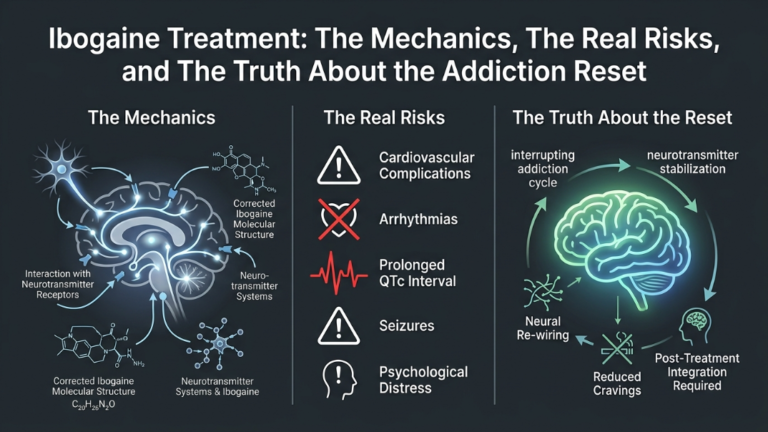
But magic does not exist in medicine. Ibogaine does not cast a spell on your brain; it performs an aggressive, top-down chemical intervention. It targets the very machinery that makes addiction feel impossible to break.
If you want to understand how does ibogaine help with addiction, you have to look past the mystical wrapper. You need to look directly at the neurobiology, the receptor sites, and the profound way this compound alters how your brain communicates with itself. Here is exactly what happens underneath the hood when you use ibogaine therapy for addiction.
Addiction changes the structural landscape of your brain. When you flood your system with external chemicals like heroin, alcohol, or cocaine, your brain stops doing its normal job. It shuts down natural production of dopamine and endorphins because it assumes the outside supply will last forever.
Your neural pathways change to accommodate this flood. They form deep, well-worn grooves, like a path carved into stone by rushing water. When you suddenly cut off the supply, your brain enters a state of panic. Your biology triggers a cascade of stress hormones, causing the physical and mental horror known as withdrawal.
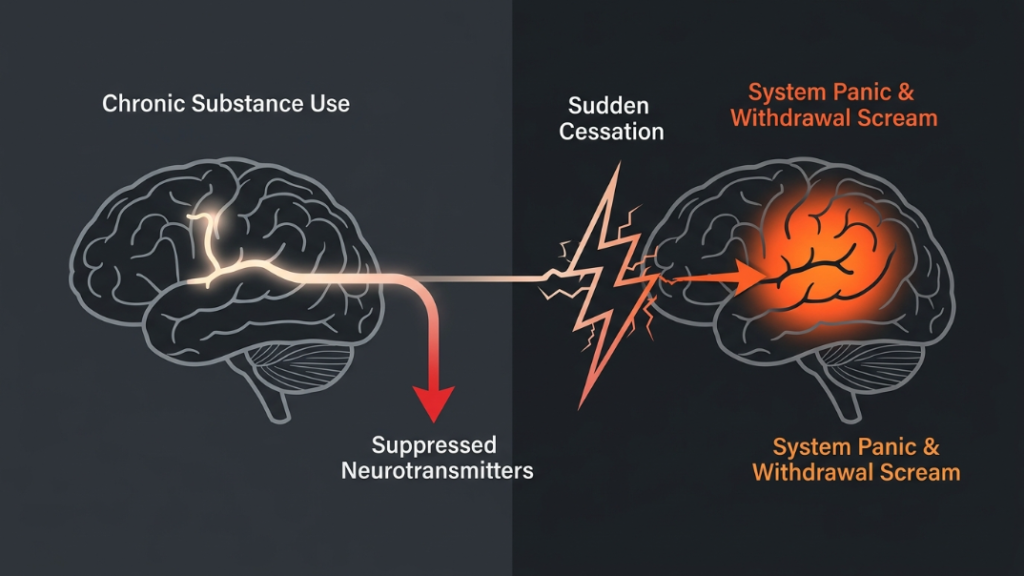
Ibogaine steps into this panic state as an uninvited wrecking ball. It does not ease you off the drug. It does not slowly taper your symptoms.
Instead, it saturates your neurochemistry all at once. It forces your brain out of its frantic loop by completely altering receptor availability. Within hours of taking a flood dose, the frantic signaling slows down. The brain stops screaming for the missing substance because ibogaine occupies the spaces that were previously left empty and starving.
To answer how does ibogaine help with addiction, you must examine its behavior as a “dirty drug.” In pharmacology, that phrase is not an insult. It means a compound interacts with a vast array of different receptors simultaneously, rather than targeting just one.
While targeted pharmaceutical drugs act like a single sniper rifle, ibogaine acts like a wide-spectrum EMP blast. It hits multiple systems at once to force a total system reboot.
For anyone struggling with short-acting or long-acting opioids, the mu-opioid receptor is the epicenter of pain. Ibogaine binds directly to these mu-opioid sites. It acts as a mild agonist, providing just enough stimulation to stop the acute physical withdrawal symptoms from triggering, but without producing the intense, addictive euphoria of typical narcotics. Your body stops shivering, sweating, and cramping because the receptors believe they have been fed.
Stimulant abuse destroys your dopamine transporters. Drugs like methamphetamine or cocaine force your brain to dump its entire reserve of dopamine into the synaptic cleft, giving you a temporary high before leaving you completely depleted. This depletion leaves you feeling depressed, flat, and desperate for another dose.
Ibogaine blocks the nicotinic acetylcholine receptors and regulates dopamine transporters. It stops the rapid reuptake of dopamine, allowing your natural levels to stabilize. It coaxes your brain back into producing its own joy, rather than relying on external chemical triggers.
Your NMDA (N-methyl-D-aspartate) receptors govern learning, memory, and importantly, chemical tolerance. When you abuse drugs over a long period, your NMDA receptors become hypersensitive, requiring you to take higher doses to get the same effect.
Ibogaine acts as an NMDA receptor antagonist. By blocking these sites, it resets your chemical tolerance back to a pre-addicted state almost instantly. This explains why chronic users can walk out of a session with their physical tolerance completely reset.
| Receptor Type | Impact of Active Addiction | Action of Ibogaine |
|---|---|---|
| Mu-Opioid Receptors | Starved, triggering withdrawal | Saturates receptor sites; stops withdrawal symptoms |
| Dopamine Transporters | Depleted, causing severe crash | Regulates dopamine reuptake; stabilizes neurotransmission |
| NMDA Receptors | Hypersensitive, leading to high tolerance | Acts as an NMDA antagonist; helps reset tolerance |
If ibogaine left your body as quickly as traditional psychedelics, its long-term success rate would disappear. The true power of ibogaine therapy for addiction lies in how your liver processes the compound.
When you ingest ibogaine, your liver metabolizes it into a secondary compound called noribogaine. Your body stores noribogaine directly inside your fat cells. It slowly leaks back into your bloodstream over the course of weeks, and sometimes months, after your initial treatment session.
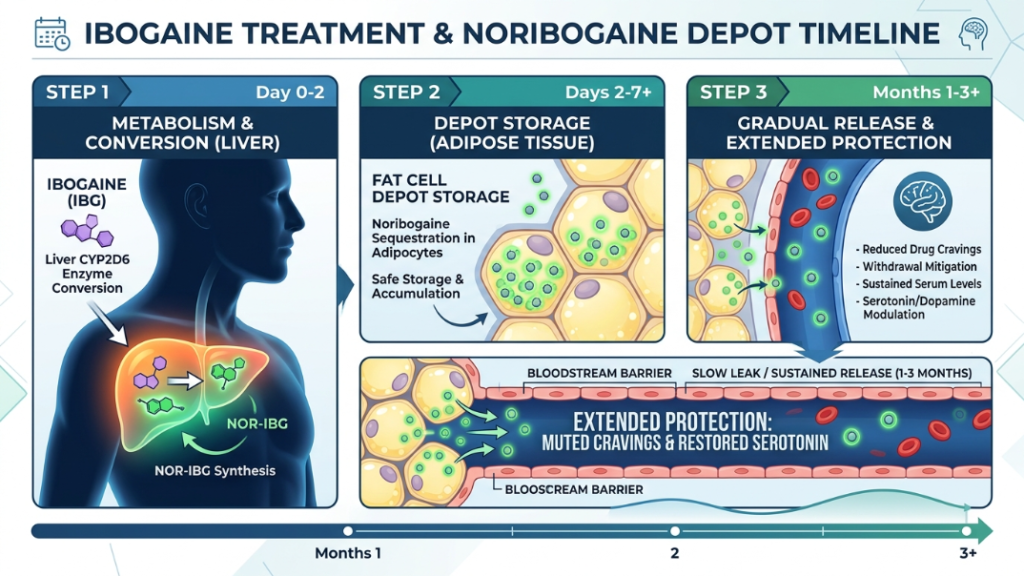
This slow release functions as a chemical shield. Noribogaine is a highly effective serotonin reuptake inhibitor. It keeps your mood elevated and prevents the sudden, crashing drops in serotonin that typically cause an early relapse.
Because noribogaine continues to sit on your opioid receptors long after you leave a clinic, you experience a prolonged window where cravings are completely muted. You do not wake up with the immediate, visceral urge to track down drugs. Your mind is quiet, giving you the rare spatial freedom to think about something other than survival.
Active addiction burns down the interior landscape of your brain. It damages the delicate branches of your neurons and shrinks your brain’s natural capacity to grow and adapt.
Ibogaine triggers the rapid production of Glial Cell Line-Derived Neurotrophic Factor, or GDNF. Scientists refer to neurotrophic factors as growth proteins for the brain. GDNF acts like high-grade fertilizer poured onto scorched earth.
This protein triggers a wave of neuroplasticity. It physically repairs damaged neural pathways, strengthens existing synaptic connections, and encourages the growth of new sprouts. It repairs the actual physical damage caused by years of neurotoxic substance abuse.
When people ask, how does ibogaine help with addiction, they often focus entirely on the immediate interruption of withdrawal. But the stimulation of GDNF is what allows for long-term recovery. It rewires the broken physical networks, restoring your brain’s cognitive flexibility so you can learn new habits and break free from automated, compulsive behaviors.
Addiction is rarely just a physical problem. People do not destroy their lives over a chemical simply because they like how it tastes; they use chemicals to numb underlying psychological wounds. If you do not address the trauma, the shame, and the emotional pain driving the behavior, any physical detox is destined to fail.
Ibogaine attacks this psychological root through a unique visionary state. It is anoneirorogen. It forces you into a vivid, waking dream state that lasts for hours.
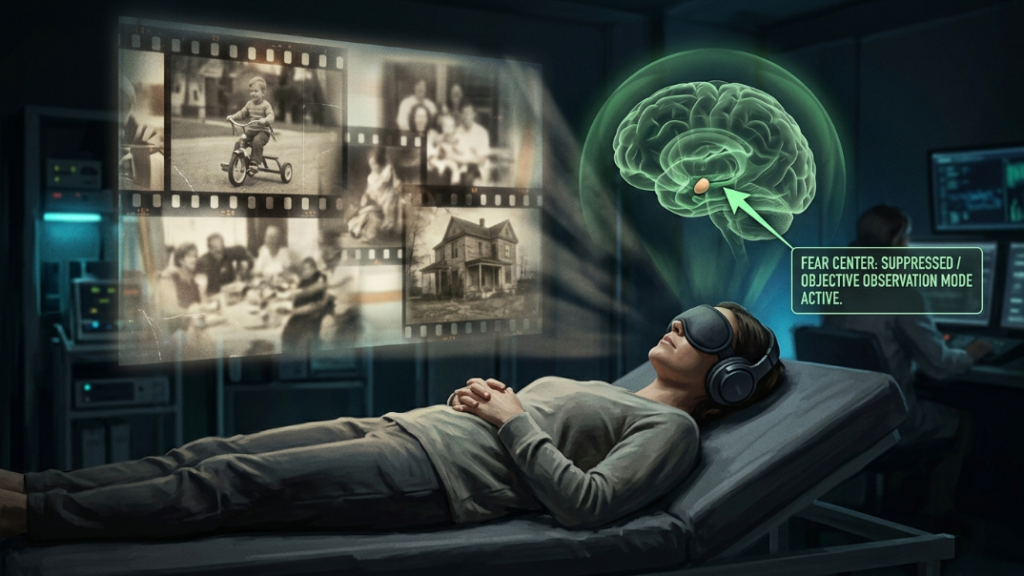
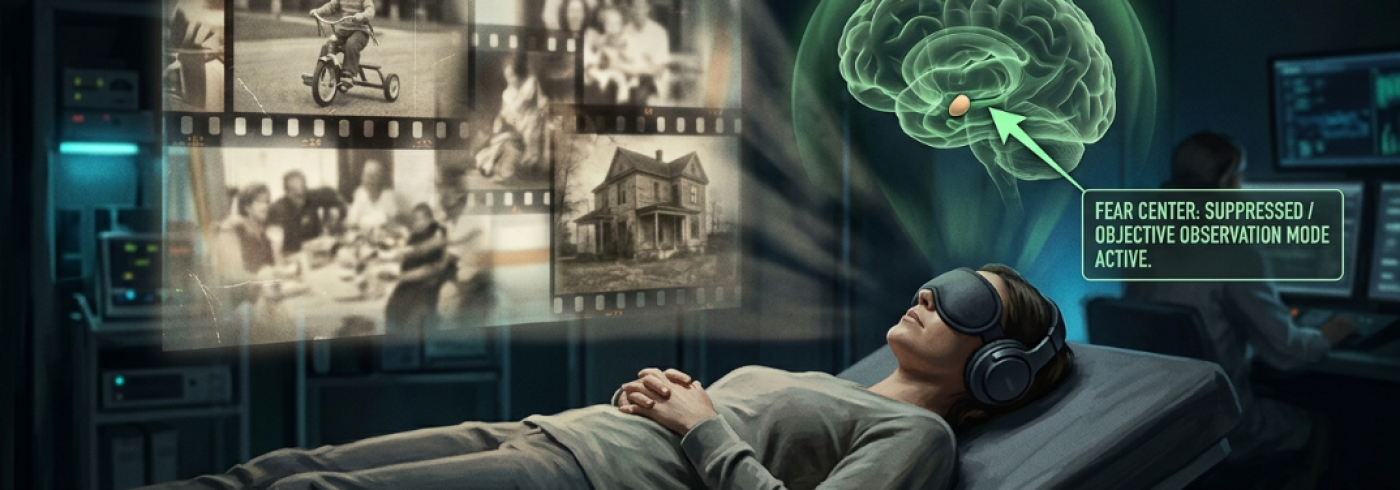
During this phase, your brain gains access to deeply buried long-term memories and repressed emotional traumas. Crucially, ibogaine suppresses the activity of your amygdala—the fear center of your brain.
This allows you to view your life’s worst moments with complete emotional detachment. You see the childhood abuse, the failed relationships, and the terrible choices you made during active addiction. But instead of feeling crushed by shame or terror, you observe them like an objective historian watching old film reels.
You see the precise moment you began using drugs to cope with your environment. You understand the hidden mechanisms behind your own self-destruction. This intense psychological review provides years of therapeutic breakthroughs in a single evening, allowing you to forgive yourself and lay down the emotional baggage that kept you trapped in the cycle of use.
The mainstream medical system relies heavily on Medication-Assisted Treatment, or MAT. If you want to get off heroin or fentanyl, doctors prescribe you methadone or Suboxone.
While MAT keeps people alive by reducing street-level crime and overdose rates, it does not heal the brain. It simply swaps a chaotic, dangerous dependency for a controlled, legal dependency. Suboxone and methadone bind tightly to your opioid receptors, keeping you dependent on an external chemical indefinitely. If you try to stop taking Suboxone, you face a prolonged, grueling withdrawal that can last for an entire month.
| Metric | Traditional MAT (Suboxone/Methadone) | Ibogaine Therapy |
|---|---|---|
| Core Strategy | Long-term chemical substitution | Immediate neurochemical reset |
| Withdrawal Handling | Extends or replaces opioid dependence | Abruptly terminates withdrawal symptoms |
| Long-term Dependency | Yes; requires daily medication for stability | No; typically administered as a single treatment protocol |
| Cellular Healing | Maintains receptor occupancy without reversing underlying adaptations | Promotes neuroplasticity through increased GDNF signaling* |
Ibogaine therapy for addiction rejects the substitution model entirely. It does not want to live in your system forever. It enters your brain, strips away the tolerance, resets the receptor sensitivity, repairs the damage via GDNF, and then clears out.
It leaves you with a entirely clean, unencumbered neurochemical profile. You are not trapped in a daily routine of visiting a clinic to receive a liquid dose or placing a film under your tongue just to avoid getting sick. You are simply clean.
Understanding how does ibogaine help with addiction requires looking at what a patient actually experiences over a standard thirty-six-hour timeline. This is a grueling physical process divided into three distinct phases.
Within an hour of swallowing the flood dose, the physical transition begins. A loud, high-pitched ringing or buzzing sound fills your ears. Your motor skills disappear entirely; trying to lift your hand or sit up straight feels like moving through thick molasses. Your body becomes heavy and completely immobilized. This is the moment ibogaine takes over your receptors, actively shutting down incoming withdrawal signals from your nervous system.
As you lie immobilized, the visionary phase begins. Even with your eyes wide open in a dark room, intense, fast-moving visual landscapes appear before you. This phase acts as a ruthless personal documentary.
The medicine forces you to watch your life’s choices play out across your internal vision. It answers the fundamental question of your addiction by showing you exactly what pain you were trying to run away from. You remain fully aware that you are lying on a mattress in a clinic, but your mind travels through the deepest basements of your subconscious memory.
The visions eventually fade, leaving you wide awake, deeply exhausted, and raw. This is the “grey day.” You cannot sleep because your brain is still processing a massive volume of neurochemical changes.
During this long, quiet period, you analyze everything you saw during the visionary phase. Your brain begins building new cognitive frameworks. You realize you can no longer live the way you used to, and you begin planning the practical steps required to build a sober life.
If you walk away from an ibogaine session believing your addiction is permanently cured, you will relapse within months.
Ibogaine is not an automated ticket to lifetime sobriety. It is a biological reset button. It clears the corrupt files from your hard drive and gives you a temporary window where your brain is plastic, your cravings are gone, and your old habits do not control your choices.
But it does not write your new life story for you.
The real work of recovery begins when you step out of the clinic door. You must use that precious, craving-free window to completely tear down and rebuild your daily existence.
If you take your newly reset brain and drop it right back into your old environment, you will get the exact same results. You will rebuild the old, destructive neural pathways within weeks. You must change your relationships, establish rigid daily routines, start intensive trauma therapy, and find a dedicated sober community.
Ibogaine breaks the heavy physical chains that keep you locked to a substance. It opens the prison cell and gives you a head start. But walking through the door and choosing to stay out in the world? That is a choice you have to make every single day.

Traditional recovery programs often feel like a revolving door. You walk into a detox center,
If you live in America and find yourself trapped in the cycle of severe substance
Most conventional addiction treatments feel like dragging a heavy sled through deep mud. You decide