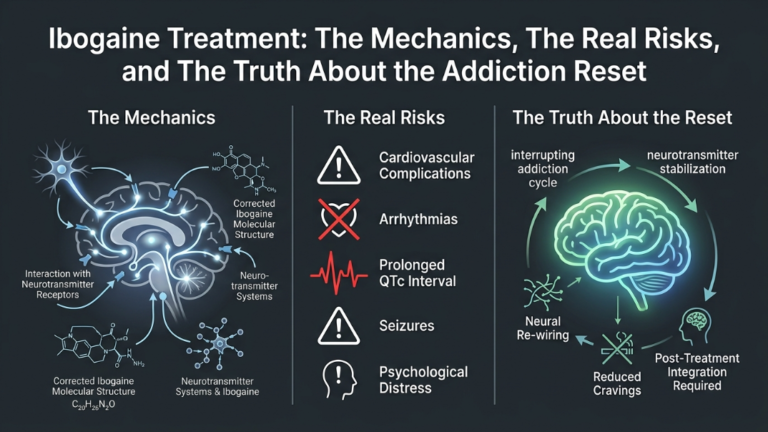
Ibogaine Treatment: The Mechanics, The Real Risks, and The Truth About the Addiction Reset
Traditional recovery programs often feel like a revolving door. You walk into a detox center,

If you’ve been researching ibogaine as a potential option for opioid dependence, PTSD, or another hard-to-treat condition, the very first question you need answered isn’t “does it work?” — it’s “is it legal?” Ibogaine legality in the US is more complicated than a simple yes or no, and getting it wrong can carry real legal consequences. This guide breaks down exactly where the law stands today, what’s changing at the state level, and what your options are if you decide to pursue treatment.
Ibogaine is illegal to possess, manufacture, distribute, or prescribe in the United States under federal law. The Drug Enforcement Administration (DEA) classifies it as a Schedule I controlled substance, the same category as heroin and LSD. That classification applies in all 50 states, with no general medical exception, no federal prescription pathway, and no state that has yet made ibogaine broadly legal for treatment.
That said, US drug law is not the whole story. A growing number of states have passed research-funding bills, a 2026 federal executive order has opened a narrow “Right to Try” pathway for some patients, and it remains lawful for Americans to travel abroad to receive ibogaine treatment in countries where it is legal or unregulated. Each of these threads matters, and we’ll walk through them one at a time.
Ibogaine was placed in Schedule I in 1970 when the Controlled Substances Act (CSA) was enacted, largely because of its hallucinogenic properties and its association with the counterculture movements of that era rather than any documented pattern of harm at the time. Under the CSA, a Schedule I designation legally requires three findings:
Decades later, that classification hasn’t changed, even though interest in ibogaine’s therapeutic potential for opioid use disorder, PTSD, and traumatic brain injury has grown substantially. Reclassifying a Schedule I substance requires either an act of Congress or a formal DEA scheduling review, which is typically triggered only after a drug completes the FDA’s clinical trial process and wins approval.
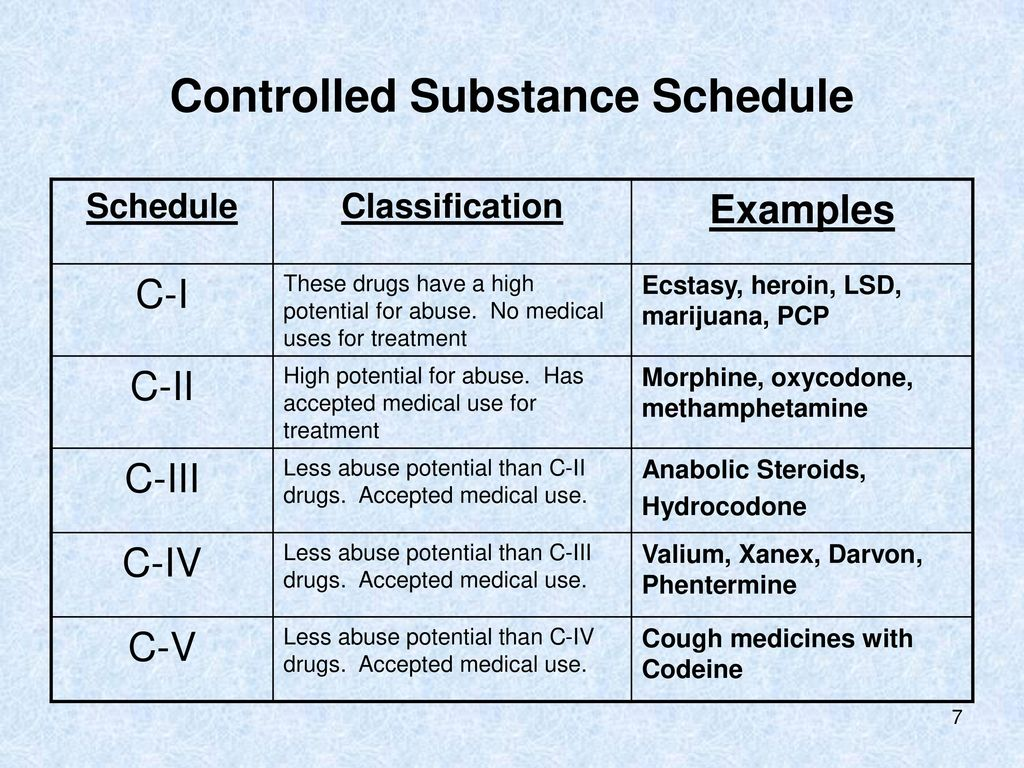
In practical terms, ibogaine’s Schedule I status means:
This is true even in states that have decriminalized other psychedelics like psilocybin. Ibogaine has followed a distinct, slower legislative path.
While ibogaine remains federally prohibited everywhere, several states have passed legislation funding research into ibogaine — which is different from legalizing treatment. It’s an important distinction, and one that’s easy to misread in headlines. Here’s an accurate snapshot of the most notable state activity:
| State | Legislation | What It Actually Does |
|---|---|---|
| Texas | SB 2308 (signed June 2025) | Allocates roughly $50 million, later expanded toward a $100 million commitment, to fund FDA-track ibogaine clinical trials through UTHealth Houston and UTMB Health |
| Mississippi | HB 314 (signed March 2026) | Appropriates $5 million to form a research consortium aimed at eventual FDA approval |
| Arizona | HB 2871 (signed 2025) | Releases $5 million for Phase 1 clinical trials on PTSD and traumatic brain injury |
| Kentucky | SB 77 (enacted April 2026 via veto override) | Establishes a state framework and funding to study ibogaine for substance use disorders |
| California | AB 1103 (signed October 2025) | Streamlines state approval for federally authorized Schedule I/II research, including ibogaine |
| Indiana | HB 1001 / Public Law 213 (2025) | Expands the state’s psilocybin research fund to include ibogaine research |
| Oregon | HB 4110 (introduced 2026) | Would have allowed a physician to provide ibogaine to qualifying patients for PTSD, depression, anxiety, or substance use disorder. According to Oregon’s own Legislative Policy and Research Office, the measure did not pass this session — despite some third-party marketing claims describing it as enacted. |
The pattern across nearly every one of these bills is the same: they fund research and clinical trial infrastructure aimed at eventual FDA approval — they do not make ibogaine legal to possess, prescribe, or use outside of an authorized trial. Be skeptical of any source claiming a state has “legalized” ibogaine for general treatment; as of mid-2026, none has.
On April 18, 2026, an executive order titled “Accelerating Medical Treatments for Serious Mental Illness” directed federal agencies to:
This order is significant, but it’s important to be precise about what it does and doesn’t do. It does not reschedule ibogaine, and it does not legalize treatment. It builds the regulatory scaffolding under which rescheduling could eventually happen, contingent on trial results the FDA hasn’t seen yet. For most patients, the practical impact today is narrow: expanded eligibility for authorized clinical trials, not a new way to access ibogaine treatment domestically.
A lot of confusion about ibogaine’s status comes from conflating different regulatory milestones that sound similar but mean very different things. Here’s the simplified sequence every ibogaine research program has to move through:
State research bills like those in Texas, Mississippi, and Arizona are funding activity in the earliest stages of this sequence. That’s meaningful progress, but it also means the realistic timeline to any form of legal domestic access — even through a narrow prescription pathway — is measured in years, not months.
Veterans make up a disproportionate share of the people researching ibogaine, largely because of its investigated potential for PTSD, traumatic brain injury, and co-occurring substance use. Several of the 2025–2026 state bills, including Oregon’s HB 4110 and Virginia’s HB 4626, were explicitly framed around veteran mental health and were championed by lawmakers with military backgrounds. Some state programs are beginning to build veteran-specific research tracks in partnership with state departments of veterans’ affairs, though enrollment remains limited to formal trials rather than open treatment access.
If you’re a veteran considering ibogaine, the VA does not currently authorize or reimburse ibogaine treatment of any kind, whether domestic or abroad, so any treatment abroad would be a self-funded, personal decision made outside VA channels.
Yes. This is one of the most misunderstood points in the entire topic, so it’s worth stating plainly: the Controlled Substances Act is a domestic law. It governs what happens within US borders and territories — it does not criminalize an American citizen receiving legal medical treatment in another country.
A few points to understand clearly:
This is why medical travel — sometimes called psychedelic or plant-medicine tourism — has become the primary route Americans use to access ibogaine legally today, while domestic research and regulatory pathways continue to develop.
Legal frameworks vary considerably by country, and the differences matter if you’re evaluating where to seek treatment:
Because these frameworks shift as legislatures and health ministries act, always verify a clinic’s current legal standing and licensing directly rather than relying on outdated summaries — including this one.
Legal access to ibogaine somewhere in the world does not automatically mean it is safe for you. This is worth stating clearly, independent of any legal discussion: ibogaine carries a well-documented cardiac risk. It can prolong the QT interval and trigger serious arrhythmias, and fatalities have occurred, disproportionately in unsupervised or poorly screened settings. Reputable clinical guidelines — including those published by the Global Ibogaine Therapy Alliance — call for cardiac screening (EKG), bloodwork, a full medication and health history review, and on-site emergency medical capability before any ibogaine session.
If you’re evaluating a provider, whether in the US research context or abroad, the legal status of the location is only the first filter. Medical screening protocols, on-site resuscitation capability, and the qualifications of the supervising physician matter just as much — arguably more.
Given how much conflicting and outdated information circulates on this topic, a careful approach matters:
Is ibogaine legal in the United States? No. It is a Schedule I controlled substance under federal law in all 50 states, with no general medical exception.
Has any US state legalized ibogaine treatment? Not yet. Several states have funded ibogaine research or clinical trial infrastructure, but as of mid-2026 no state has established a working legal treatment program open to the general public.
Can I be prosecuted for traveling abroad for ibogaine treatment? No. Traveling to and receiving legal medical treatment in another country is not a violation of US law. Bringing ibogaine back into the US is illegal.
Will ibogaine become legal in the US soon? Not in the near term. FDA approval for a Schedule I compound typically requires 7 to 15 years from the start of clinical development, following Phase 2 and Phase 3 trials, an NDA submission, and a DEA rescheduling review.
Does ibogaine show up on a standard drug test? Standard five- and ten-panel workplace tests do not screen for ibogaine or noribogaine, though specialized confirmatory testing can detect it.
This article is for educational purposes about ibogaine legality and reflects the legal landscape as of mid-2026, which continues to evolve. It is not legal or medical advice. Consult a qualified attorney for legal questions specific to your situation, and a physician before pursuing any ibogaine treatment. We can also guide you if you consult with us.

Traditional recovery programs often feel like a revolving door. You walk into a detox center,
If you live in America and find yourself trapped in the cycle of severe substance

Most conventional addiction treatments feel like dragging a heavy sled through deep mud. You decide